
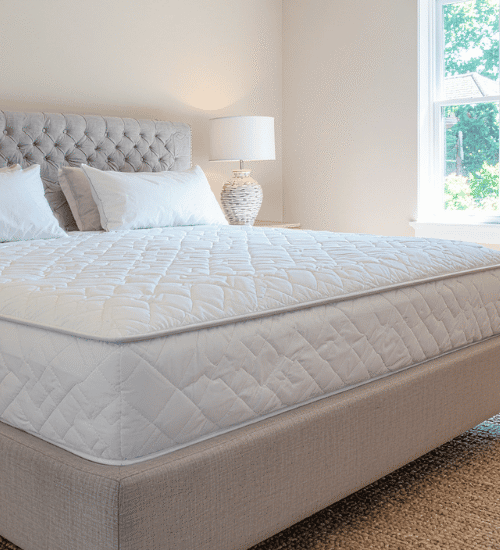
Most people spend roughly eight hours every night on their mattress, but rarely clean it. Over time, dust mites, dead skin cells, sweat, bacteria, and accidental spills accumulate deep within the fibers.
The result? A mattress that smells stale, harbors allergens, and deteriorates faster than it should. The good news: you don’t need professional cleaning or harsh chemicals.
With the right DIY methods and a simple maintenance schedule, you can keep your mattress fresh, hygienic, and extend its lifespan by years.
This complete guide walks you through seven proven cleaning methods for different stain types, deodorizing techniques, prevention strategies, and a maintenance schedule that takes the guesswork out of mattress care.
Quick Cost Comparison
| Method | Initial Cost | Cost Per Use | Reusability | Best Budget Pick? |
|---|---|---|---|---|
| Baking Soda Deep Clean | $3-5 | $0.10 | Infinite | ✅ Yes |
| Hydrogen Peroxide Spray | $4-6 | $0.15 | Multiple uses | ✅ Yes |
| Baking Soda + H2O2 Paste | $7-10 | $0.25 | Infinite | ⭐ Best heavy-duty |
| Vinegar & Water Solution | $2-4 | $0.05 | Infinite | ✅ Yes |
| Enzymatic Cleaner | $10-20 | $1-2 per use | Multiple uses | ⭐ Best for pet accidents |
| Salt & Lemon Juice Paste | $3-5 | $0.10 | Infinite | ✅ Yes |
| Sunlight & Air Drying | $0 | $0 | Infinite | ✅ Yes |
Bottom line: Baking soda, vinegar, and sunlight handle 90% of mattress cleaning needs and cost nearly nothing. Enzymatic cleaners are worth the investment if you have pets or persistent odors.
1. The Baking Soda Deep Clean (Deodorize & Freshen)
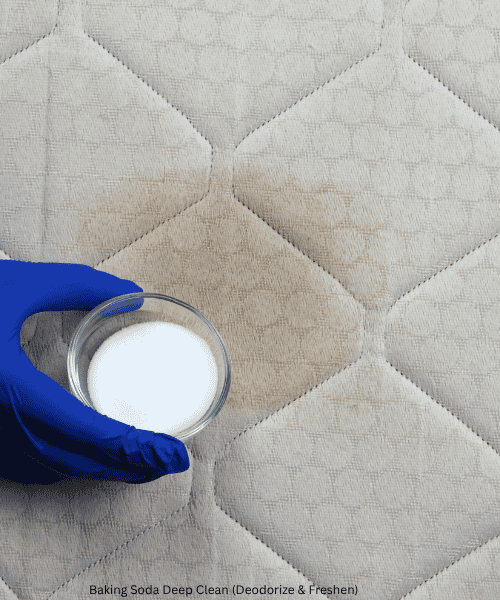
Why it works: Baking soda is a natural deodorizer that absorbs odors, moisture, and kills bacteria without chemicals or artificial fragrances. It’s safe for all mattress types and incredibly affordable.
What you’ll need:
- 2-4 boxes of baking soda (depending on mattress size)
- Vacuum with upholstery attachment
- Optional: essential oil (lavender, lemon, or eucalyptus)
- Optional: fine mesh strainer or shaker bottle
Step-by-step:
- Strip the bed: Remove all bedding, sheets, and pillows. Wash the sheets separately in hot water.
- Vacuum thoroughly: Use the upholstery attachment to vacuum the entire mattress surface, top, bottom, and sides. Pay special attention to seams and crevices where dust mites and debris hide. Spend at least 10 minutes vacuuming.
- Sprinkle baking soda generously: Cover the entire mattress surface with a thin, even layer of baking soda. Don’t be stingy, the more surface coverage, the more odor absorbed.
- Let it sit: For light refreshing, 2 hours is enough. For heavy odors, leave it overnight (8-24 hours). The longer it sits, the more odor it absorbs.
- Vacuum it all up: Use the upholstery attachment again to thoroughly vacuum every trace of baking soda. Make sure none remains in seams, leftover powder can attract moisture and mildew.
- Flip and repeat: If your mattress is double-sided, flip it and repeat steps 2-5 on the other side.
Pro tips:
- Add scent: Before sprinkling, mix 10-15 drops of essential oil into the baking soda. Let it dry for an hour, then sprinkle. Your mattress will smell fresh and clean.
- Use a shaker: A salt shaker or flour shaker makes even distribution easier and faster.
- Do it in the morning: Sprinkle in the morning, let it sit all day, vacuum before bed. This gives maximum dwell time.
- Open windows: Air circulation helps the baking soda work more effectively.
Best for: General odor removal, dust mite control, monthly refreshing, allergen reduction.
Safety: Baking soda is safe for all mattress types, memory foam, innerspring, hybrid, pillow-top, all good.
2. Hydrogen Peroxide Spray for Fresh Stains (The Quick Fix)
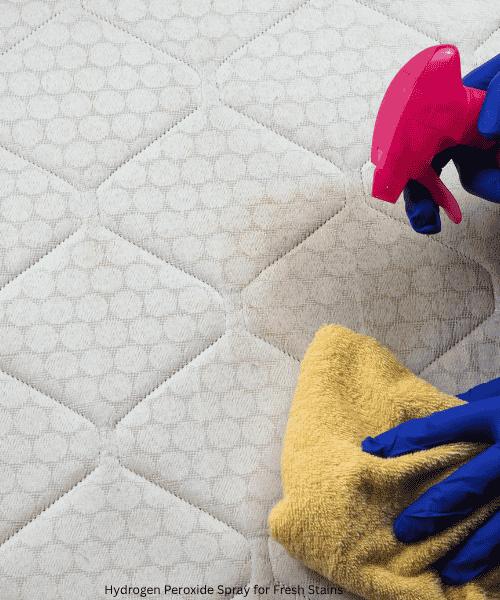
Why it works: Hydrogen peroxide is a natural oxidizer that breaks down protein-based stains (blood, sweat, urine) without damaging most fabrics. It’s gentle, effective, and dries quickly.
What you’ll need:
- 3% hydrogen peroxide (standard drugstore bottle)
- Water
- Spray bottle
- Clean white cloths or paper towels
- Optional: baking soda for drying
Step-by-step:
- Dilute the peroxide: Mix equal parts 3% hydrogen peroxide and water in a spray bottle. (You can use straight peroxide for tough stains, but diluting first prevents accidental bleaching.)
- Test first: Always test on a hidden corner of the mattress to ensure it won’t discolor the fabric.
- Spray the stain: Lightly mist the stained area. Don’t oversaturate, you want damp, not soaking wet.
- Let it sit: Allow 5-10 minutes for the peroxide to break down the stain. You’ll see it bubbling slightly as it works.
- Blot, don’t rub: Use a clean white cloth to blot the area gently. Pressing helps absorb the liquid and lifted stain. Never scrub or rub, this spreads the stain deeper.
- Repeat if needed: For stubborn stains, spray again and blot a second time.
- Dry thoroughly: Open windows, turn on a fan, or sprinkle baking soda over the area to absorb remaining moisture. Let dry completely before remaking the bed.
Pro tips:
- Use white cloths only, colored fabrics can transfer dye to the mattress.
- For blood stains, cold water works better than warm. Cold water prevents the protein from setting.
- The longer the stain has been there, the more peroxide and time it needs.
- Test on an inconspicuous corner first, some mattress fabrics can be lightened by hydrogen peroxide.
Best for: Fresh blood stains, sweat stains, bodily fluid accidents, immediate spot treatment.
3. Baking Soda + Hydrogen Peroxide Paste (The Heavy-Hitter for Tough Stains)
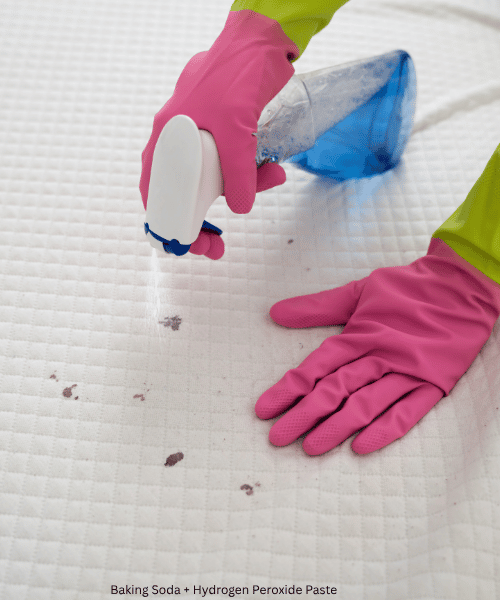
Why it works: This combination is the mattress equivalent of oxygen bleach on showers, it tackles stubborn stains that single methods can’t handle. The baking soda provides mild abrasion and deodorizing, while hydrogen peroxide breaks down stains at the molecular level.
What you’ll need:
- 8 oz hydrogen peroxide (3%)
- 3 tablespoons baking soda
- ½ teaspoon dish soap (Dawn or similar)
- Empty spray bottle
- Soft scrub brush or old toothbrush
- Clean white cloths
- Optional: gloves
Step-by-step:
- Mix the solution: Combine the hydrogen peroxide, baking soda, and dish soap in a spray bottle. Shake well. The mixture will foam slightly, this is normal.
- Test first: Spray on a hidden area to ensure it won’t discolor your mattress.
- Spray generously: Apply the mixture directly to the stain, covering the affected area completely. The foam helps it penetrate.
- Let it work: Allow 10-15 minutes for the solution to break down the stain. You’ll see it fizzing as the baking soda and peroxide react.
- Scrub gently: Use a soft brush or old toothbrush to gently scrub the area in circular motions. This helps lift stubborn stains without damaging the fabric.
- Blot thoroughly: Use clean white cloths to blot up all moisture. Press firmly to absorb as much liquid as possible.
- Air dry: Open windows, use fans, or sprinkle more baking soda to speed drying. The mattress must be completely dry before use.
Safety notes:
- This mixture is safe for most mattress fabrics, but always test first on a hidden spot.
- Do not mix this solution with other cleaners, hydrogen peroxide with ammonia-based cleaners creates toxic fumes.
- Wear gloves if you have sensitive skin.
- The dish soap is key, it helps the solution spread and break down stubborn stains. Don’t skip it.
Pro tips:
- Make a fresh batch each time, the solution loses potency after a few hours.
- For set-in stains (weeks or months old), let the mixture sit for 20-30 minutes before scrubbing.
- This is your best bet for wine, juice, urine, and mysterious dark stains.
Best for: Tough stains, set-in marks, discoloration, wine spills, urine odor.
4. Vinegar & Water Solution (Budget-Friendly Deodorizer)
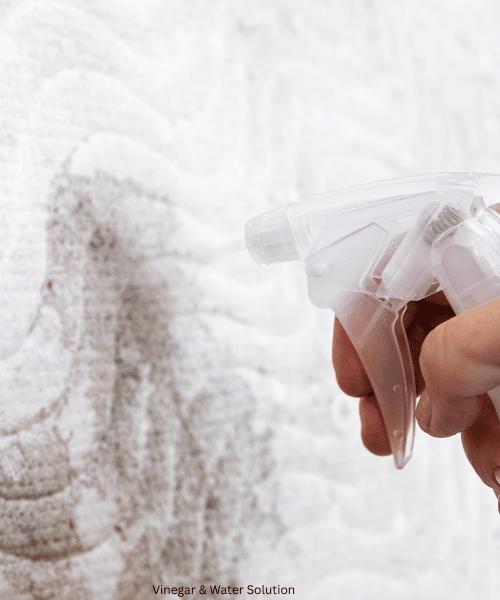
Why it works: Vinegar is acidic and breaks down organic stains and odor-causing bacteria naturally. It’s one of the cheapest methods and surprisingly effective for urine odors and light stains.
What you’ll need:
- White vinegar
- Water
- Spray bottle
- Clean cloths or paper towels
- Optional: baking soda for drying
Step-by-step:
- Mix the solution: Combine equal parts white vinegar and water in a spray bottle. (Example: 1 cup vinegar + 1 cup water.)
- Lightly spray: Mist the affected area. The key is “light”, you want to dampen, not soak. Oversaturating takes hours to dry.
- Let it sit: Allow 10 minutes for the vinegar to break down odors and stains.
- Blot immediately: Use a clean cloth to blot up the vinegar solution. Press firmly to remove as much moisture as possible.
- Air dry: Open windows and let the mattress air dry completely. Vinegar smell will fade as it dries.
- Optional: Sprinkle baking soda over the area to speed drying and neutralize any remaining vinegar smell.
Pro tips:
- Vinegar smell is strong but temporary, it dissipates within 24 hours, especially with ventilation.
- This method works best on fresh stains. For set-in stains, combine with baking soda (see Method 3).
- Vinegar is safe for all mattress types, including memory foam.
- For urine odor specifically, vinegar is one of the best natural solutions because it breaks down the uric acid.
Caution:
- Don’t use on mattresses with water-sensitive inner springs, oversaturation can cause rust.
- If your mattress is delicate or antique, test first.
Best for: Urine odor, light stains, budget cleaning, deodorizing, pet accidents.
5. Enzymatic Cleaner Method (For Pet Accidents & Organic Stains)
Why it works: Enzymatic cleaners contain proteins that break down organic compounds, proteins in urine, feces, vomit, and other bodily fluids. They work at a molecular level, eliminating stains and odors completely rather than just masking them.
What you’ll need:
- Enzymatic cleaner (Nature’s Miracle, Rocco & Roxie, Fels-Naptha, or similar)
- Clean cloths
- Optional: plastic wrap or shower curtain to keep the area moist
Step-by-step:
- Read instructions: Different enzymatic cleaners have different dilutions and dwell times. Follow the specific product instructions.
- Saturate the stain: Apply the enzymatic cleaner generously to the stained area, it needs to penetrate deep into the fibers where the organic compound is trapped.
- Let it work: Dwell times vary (usually 12-24 hours). For best results, keep the area moist during this time. You can cover it with plastic wrap to prevent drying.
- Check progress: After the recommended time, the stain should be significantly lighter or gone.
- Blot thoroughly: Use clean cloths to blot up all remaining cleaner and dissolved stain. You may need to do this multiple times.
- Rinse if needed: Some products recommend a final rinse with clean water. Follow the product instructions.
- Air dry completely: Use fans, open windows, or place in direct sunlight to dry. The mattress must be fully dry before use.
Pro tips:
- Enzymatic cleaners are worth the cost if you have pets or persistent odor problems. They solve the problem permanently.
- The longer you leave it on (within the recommended time), the better it works. Don’t rush.
- For old, set-in urine stains (months old), enzymatic cleaners are often the only solution that fully removes the odor.
- These cleaners work on fresh and old stains equally well, they break down the organic matter regardless.
Best for: Pet accidents (urine, feces, vomit), old urine odors, stubborn organic stains, permanent odor elimination.
6. Salt & Lemon Juice Paste (For Wine, Coffee, & Food Stains)
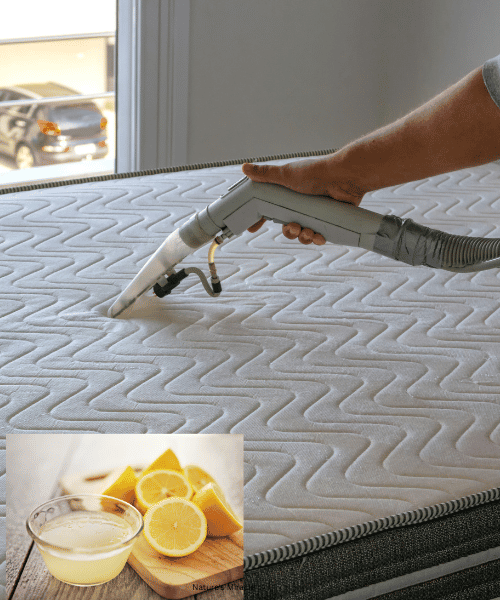
Why it works: Salt is highly absorbent and pulls liquid out of fibers, while lemon juice’s citric acid breaks down color stains naturally. This combination is especially effective on red wine, coffee, and fruit juice.
What you’ll need:
- Salt
- Fresh lemon juice (bottled is fine)
- Small bowl
- Soft brush or cloth
- Paper towels or clean cloth for blotting
Step-by-step:
- Blot fresh spills immediately: If the stain is fresh, blot up as much liquid as possible with paper towels or a cloth. Press firmly, don’t rub.
- Make the paste: Mix salt and lemon juice in a bowl until you reach a spreadable paste consistency. (Start with 2 tablespoons salt + 2 tablespoons lemon juice, adjust as needed.)
- Apply the paste: Spread the paste generously over the stain, covering the entire affected area.
- Let it sit: Allow 30 minutes to 2 hours. For older stains, the longer dwell time helps break down the color pigments.
- Scrub gently: Use a soft brush or cloth to gently scrub the paste into the stain. Use circular motions and light pressure, you’re not trying to scrub away the mattress.
- Blot thoroughly: Use clean cloths to blot away all paste and lifted stain material. You may need several cloths.
- Rinse lightly: Spray a small amount of water to rinse away any remaining salt or lemon residue.
- Air dry: Open windows and allow the mattress to dry completely. Lemon juice smell is pleasant and fades quickly.
Pro tips:
- The sooner you treat a stain, the better the results. Older stains are harder to remove.
- Fresh lemon juice is slightly more effective than bottled, but bottled works fine.
- Don’t over-wet the mattress, use minimal water when rinsing.
- This method leaves a fresh lemon scent, which is a bonus.
Best for: Red wine stains, coffee stains, fruit juice, food stains, color-based discoloration.
7. Sunlight & Air Drying (The Natural Refresher)
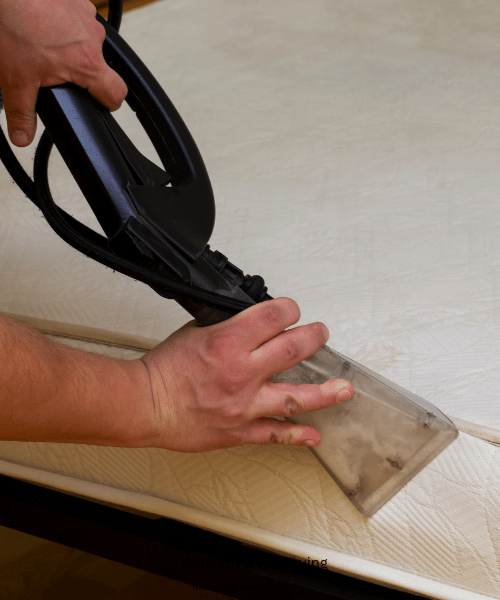
Why it works: UV light from sunlight is a natural antimicrobial, it kills bacteria, dust mites, and odor-causing microbes. Combined with fresh air circulation, sunlight naturally refreshes a mattress without chemicals.
What you’ll need:
- A sunny day (at least 4-8 hours of direct sun)
- A clothesline, deck, or outdoor space to lean the mattress
- Optional: baking soda before sun exposure
Step-by-step:
- Choose a sunny day: Pick a day with at least 4-8 hours of sunshine and low humidity (dry days work better than humid days).
- Prepare the mattress: If desired, sprinkle baking soda on both sides the night before and vacuum thoroughly. This boosts the cleaning effect.
- Move the mattress outside: Lean it vertically or place it flat in direct sunlight. If leaning, ensure it’s stable and won’t tip.
- Leave in the sun: Let it bask for at least 4-6 hours. Flip it halfway through to expose both sides equally.
- Keep it dry: Don’t let the mattress get rained on. If rain is forecast, bring it back inside.
- Bring it back in: After sun exposure, bring the mattress back inside and let it air out in your bedroom for a few hours before making the bed.
Pro tips:
- Sunlight is especially effective in spring and summer. Winter sun is weaker but still helpful.
- Do this monthly or seasonally for best results, it’s your most natural maintenance tool.
- If you don’t have outdoor space, place the mattress in a sunny room with open windows.
- The smell of sun-dried mattress is incomparable, fresh, clean, and chemical-free.
Best for: Monthly refreshing, allergen reduction, odor control, preventative maintenance, all-natural cleaning.
Deodorizing Techniques (Between Deep Cleans)
You don’t need to deep clean weekly. These quick deodorizing methods keep your mattress fresh in between full cleanings.
Baking Soda Sprinkle (Weekly)
- Sprinkle a thin layer of baking soda over the mattress before bed or in the morning.
- Let it sit 2-4 hours.
- Vacuum thoroughly.
- Cost: pennies. Time: 10 minutes.
Crumpled Newspaper Under the Bed
- Place crumpled newspaper, open boxes of baking soda, or activated charcoal under the bed frame.
- These absorb odors passively overnight.
- Replace every 2-4 weeks.
- Cost: free to $3. Time: 2 minutes.
Essential Oil Spray (Quick Refresh)
- Mix 5 drops essential oil (lavender, lemon, eucalyptus) with 1 cup water in a spray bottle.
- Lightly mist the mattress (don’t soak it).
- Let air dry.
- Cost: $5-10 for the oil, lasts months. Time: 5 minutes.
Fabric Spray
- Use store-bought fabric refresher spray (Febreze, similar brands) for a quick odor mask.
- Effective for light odors between deep cleans.
- Cost: $3-5. Time: 2 minutes.
Open Windows & Ventilation
- The simplest method: open windows for 30 minutes daily.
- Fresh air circulation naturally reduces odors.
- Cost: free. Time: negligible.
Prevention: Stop Stains Before They Start
Deep cleaning matters, but prevention is what saves you hours of scrubbing. Here are the habits that keep your mattress cleaner longer.
Use a Mattress Protector
- A waterproof, removable, washable mattress protector is your best investment.
- It creates a barrier between your body and the mattress, catching spills before they penetrate.
- Look for ones that are noiseless and breathable (some crinkle).
- Cost: $20-80 one-time. Benefit: extends mattress life by 5+ years.
- Wash the protector monthly in hot water.
Wash Bedding Weekly
- Wash sheets, pillowcases, and blankets in hot water weekly.
- This removes dead skin cells, sweat, and dust mites before they reach the mattress.
- Use a mild detergent.
No Eating or Drinking in Bed
- Food crumbs and liquid spills are the primary cause of stains and odors.
- If you must eat in bed, use a tray and eat carefully.
Keep Pets Off (If Possible)
- Pets introduce oils, hair, dirt, and accident risks.
- If pets sleep in bed, use a removable duvet or throw on top of the sheets. Wash it weekly.
Rotate and Flip Regularly
- Every 3 months, rotate the mattress 180 degrees (head to foot).
- If double-sided, flip it (top becomes bottom).
- This distributes wear evenly and prevents sagging in one area.
- Mark a calendar so you don’t forget.
Ensure Good Air Circulation
- Open windows daily, even for 10 minutes.
- Use a ceiling fan or portable fan in the bedroom.
- Avoid pushing the bed directly against a wall, allow air to flow underneath.
Vacuum Monthly
- Run the upholstery attachment over the mattress surface monthly (no cleaning solution needed).
- This removes surface dust, dead skin cells, and dust mite droppings.
Mattress Cleaning Maintenance Schedule at a Glance
| Frequency | Task | Time | Method |
|---|---|---|---|
| Daily | Open windows, air circulation | 5-10 min | Ventilation |
| Weekly | Vacuum surface, baking soda sprinkle | 10 min | Method 1 (light) |
| Monthly | Baking soda deep clean + sunlight | 30-45 min | Method 1 + Method 7 |
| Quarterly | Full refresh: rotate, flip, spot check | 15 min | Rotation + inspection |
| As-needed | Spot treat stains immediately | 10-20 min | Method 2, 3, or 4 |
Frequently Asked Questions
How often should you clean a mattress?
Vacuum weekly (5 minutes), deep clean with baking soda monthly (30 minutes), and sunlight refresh seasonally. Spot treat stains immediately. This schedule prevents the need for emergency deep cleaning and extends mattress life significantly.
Can you use bleach on a mattress?
No. Bleach is too harsh and will damage mattress fabrics, create toxic fumes, and leave permanent discoloration. Stick with hydrogen peroxide (diluted) or enzymatic cleaners for tough stains.
How do you dry a wet mattress after cleaning?
Use fans, open windows, and ensure good air circulation. Sprinkle baking soda to absorb moisture. In humid climates, place the mattress in direct sunlight or use a dehumidifier. The mattress must be completely dry before use to prevent mold. This can take 12-24 hours depending on humidity.
Will cleaning a mattress reduce dust mites?
Yes. Vacuuming removes dust mites and their droppings. Baking soda kills some mites. Sunlight kills more. Regular cleaning (weekly vacuuming + monthly deep cleaning) significantly reduces dust mite populations, which is especially important for allergy sufferers.
What’s the best mattress protector?
Look for waterproof, breathable, hypoallergenic protectors with deep pockets that fit your mattress size. Top brands include SafeRest, Linenspa, and Waterproof Mattress Protector. Cost ranges $20-80. Ensure it’s machine washable and quiet (some plastic-based protectors crinkle when you move).
How long does a mattress last if properly maintained?
With regular cleaning, rotation, and a mattress protector, a quality mattress lasts 7-10 years (some even 15). Without maintenance, expect 5-7 years. Proper care essentially adds 2-5 extra years of life, easily worth the 30-60 minutes monthly.
What if the stain won’t come out?
If a stain persists after multiple cleaning attempts, it’s likely deeply set or the mattress material is delicate. Try enzymatic cleaners (Method 5), they often work when nothing else does. If still unsuccessful, consider professional mattress cleaning or living with it. A mattress protector prevents future stains.
Can I use a vacuum with a wet/dry shop vac?
Yes, for wet cleaning methods. A shop vac is excellent for removing excess moisture after using hydrogen peroxide or enzymatic cleaners. Just ensure the mattress surface is only damp, not soaking, before vacuuming.
How do I deal with old, set-in urine odors?
Enzymatic cleaners are your best option, they break down the uric acid that causes the smell. Vinegar and baking soda work but may only mask the odor. Apply the enzymatic cleaner generously, let it sit overnight, and allow it to dry completely. You may need to repeat if the smell is very old or severe.
The Bottom Line
Your mattress is an investment, you spend a third of your life on it. A clean mattress means better sleep, fewer allergens, and years of extra life from your investment.
Start today with the easiest method:
- For general freshness: Baking soda deep clean (Method 1) + monthly sunlight (Method 7).
- For fresh stains: Hydrogen peroxide spray (Method 2).
- For tough stains: Baking soda + hydrogen peroxide paste (Method 3).
- For urine odor: Enzymatic cleaner (Method 5) or vinegar solution (Method 4).
- For wine or food stains: Salt & lemon paste (Method 6).
Then commit to the maintenance schedule, weekly vacuuming, monthly deep cleaning, and quarterly rotation. That’s it. You’ll keep your mattress fresh, extend its life, improve your sleep quality, and save money in the long run.
Your mattress will thank you. And so will your lungs.
Related Post: