
Dining room decor ideas don’t have to be complicated.
The right approach combines smart table styling with intentional wall design.
Here are twelve proven strategies that work, whether you’re hosting formal dinners or casual family meals.
1. The Layered Placemat Strategy
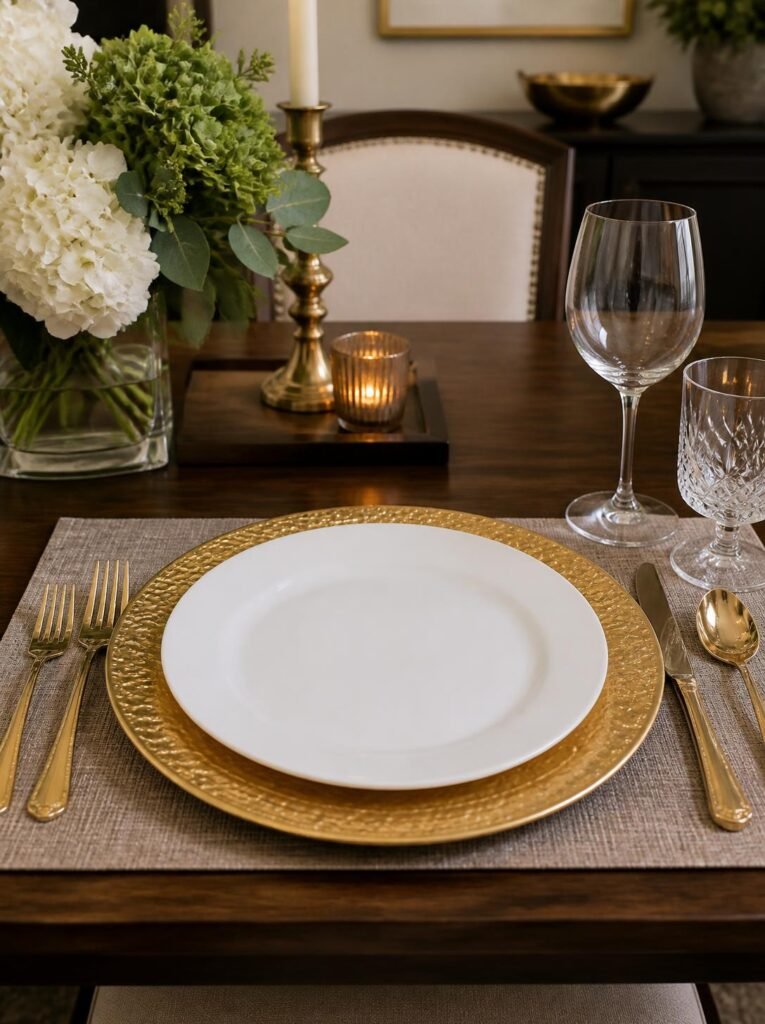
Start with a foundation. Place a charger plate down first, this decorative base adds formality and creates a visual frame. Layer a dinner plate on top in white, cream, or subtle pattern. Add a linen or woven placemat underneath to anchor the setting.
This three-layer approach works because it guides the eye downward and creates depth. Your guests see intentional design, not just a plate on a table. Gold and silver chargers feel traditional. Wood or ceramic chargers read modern. Commit to one metal tone across the table, mixing too many creates visual noise.
The best part: you can change the look by swapping placemats seasonally without replacing everything. Spring calls for lighter textiles. Winter suits heavier linens.
2. Deep Wall Colors That Ground the Room
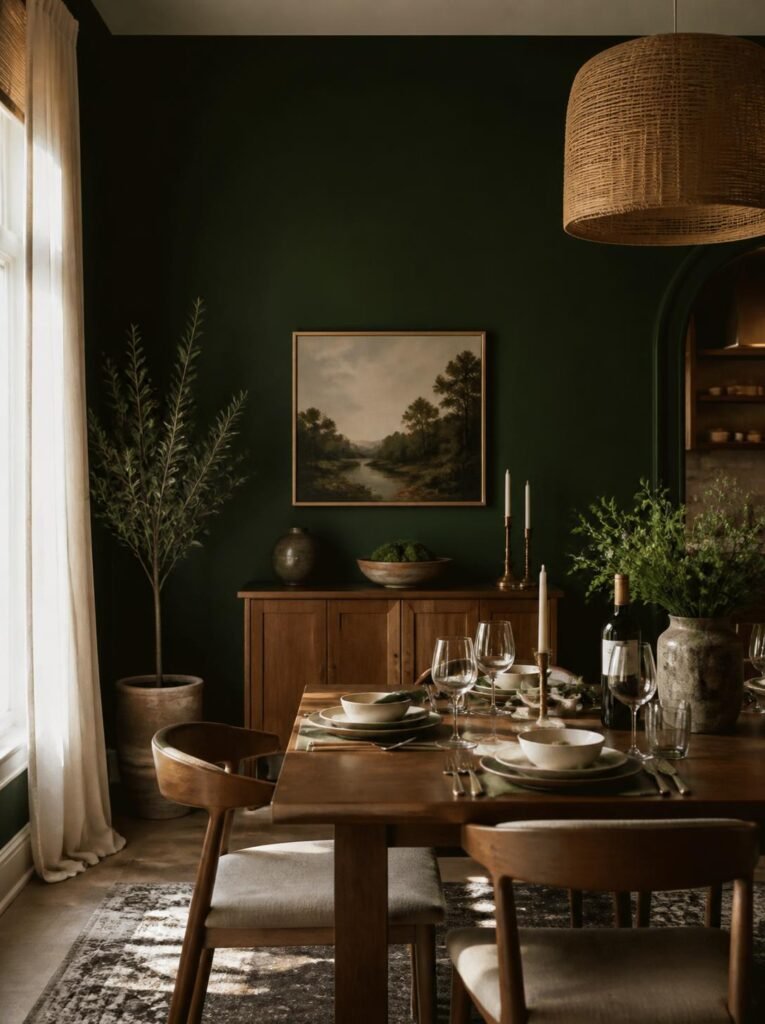
Stop playing it safe with beige. Deep dining room decor ideas work better when walls anchor the space. Try forest green, navy blue, warm charcoal, or terracotta. These colors make the room feel sophisticated and intimate without feeling dark.
Deep walls make your table, lighting, and artwork pop. They’re forgiving, spills and fingerprints don’t show. They photograph well. Guests feel wrapped in the space rather than sitting in a blank box.
Paint one accent wall or commit to all four. Both approaches work if executed cleanly. Pair deep walls with warm lighting (2700K bulbs) to keep the room inviting rather than cave-like.
3. Statement Lighting Above the Table1
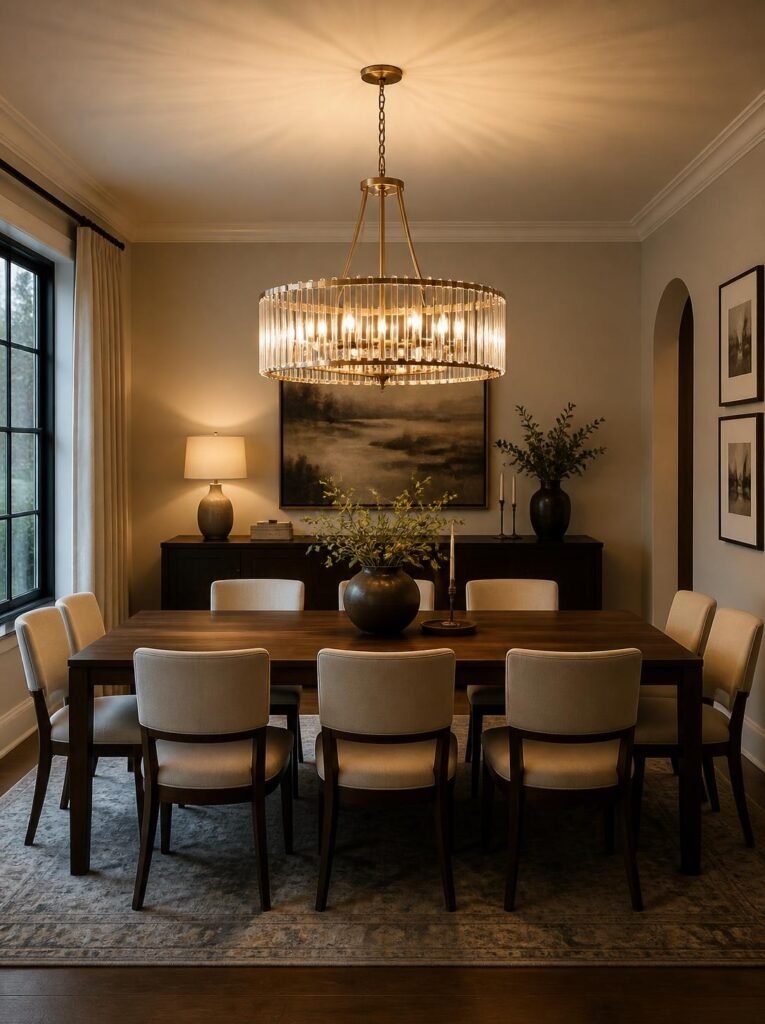
Forget recessed lights alone. Dining room decor ideas require a focal point overhead. Install a pendant fixture, chandelier, or cluster of hanging lights directly above your table.
Hang the fixture 30 to 36 inches above the table surface. Size matters, your fixture should be roughly one-third the width of your table. A small pendant over a large table looks lost. An oversized chandelier over a compact table overwhelms the space.
Brass, gold, and warm metal finishes feel inviting. Black or matte finishes feel contemporary. Crystal or glass diffuses light beautifully. Add a dimmer switch so you can shift from bright (everyday) to soft (entertaining).
4. White and Cream Napkins with Rings
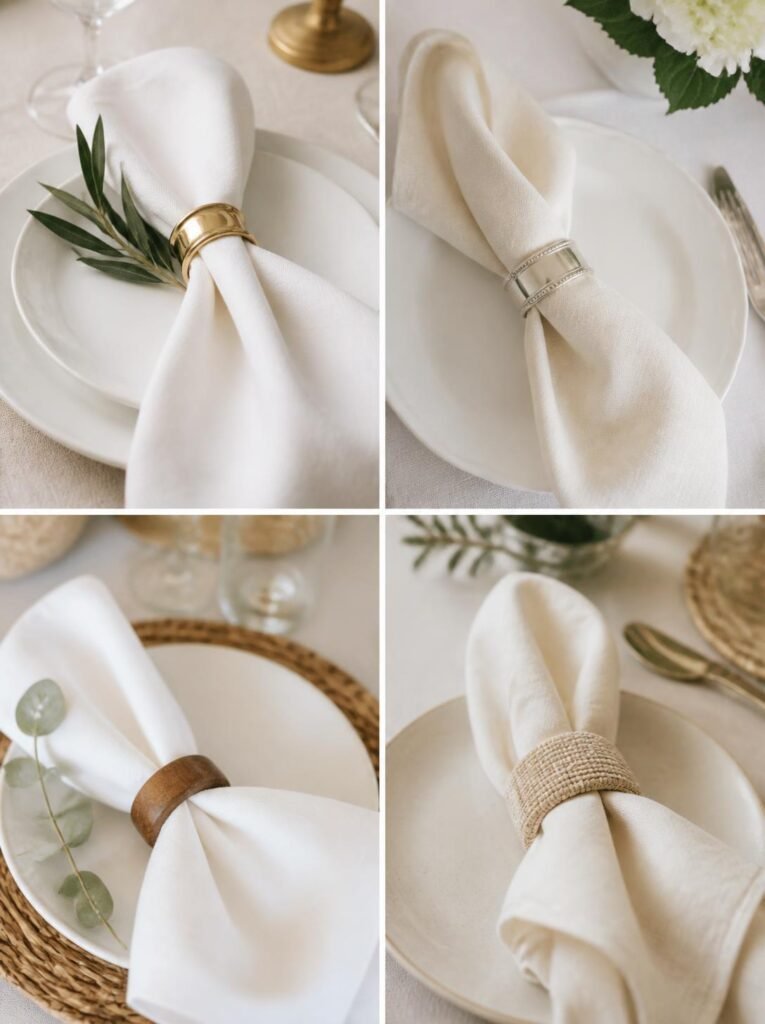
Napkins matter more than most people think. White or cream linen napkins work with every table style. They feel formal without trying. Cotton napkins work for casual dining, but linen reads more intentional.
Napkin rings elevate the look instantly. Gold rings, silver rings, natural wood rings, or fabric rings in your color palette all work. Fold your napkins simply, thirds, triangles, or just a casual drape. The fold plus ring combination signals you put thought into the details.
For large gatherings, this detail costs almost nothing but makes the table feel curated and intentional. Guests notice these touches, even if they can’t articulate why they matter.
5. Centerpieces That Don’t Block Sightlines
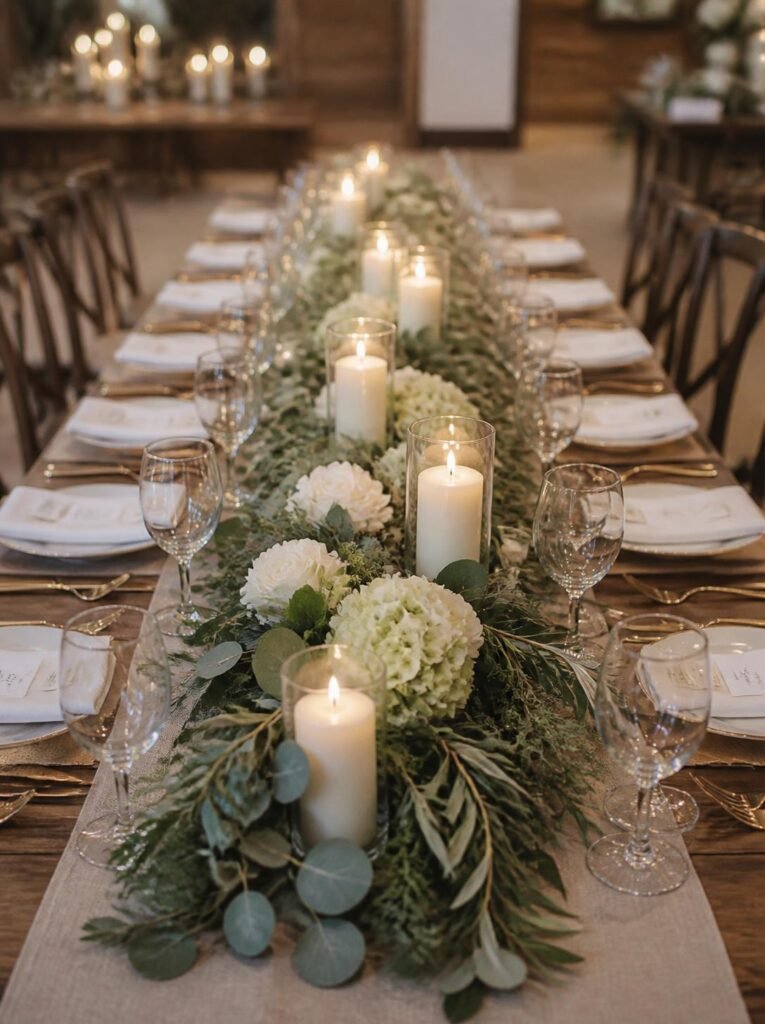
The biggest mistake people make with dining room decor ideas is building a centerpiece that blocks guests from seeing each other. Keep it low (under 12 inches) or tall enough to see under (over 18 inches).
Use fresh flowers, branches, or greenery down the center of the table in a long, narrow arrangement. Add three to five pillar candles in varying heights. Avoid heavily scented flowers, they compete with food. Roses, hydrangeas, eucalyptus, and olive branches stay timeless.
Candles matter more than flowers. They add warmth, formality, and a restaurant-quality feel. Group them in odd numbers (three, five, seven) rather than pairs. Varying heights create visual interest.
6. Gallery Wall Behind the Buffet or Console
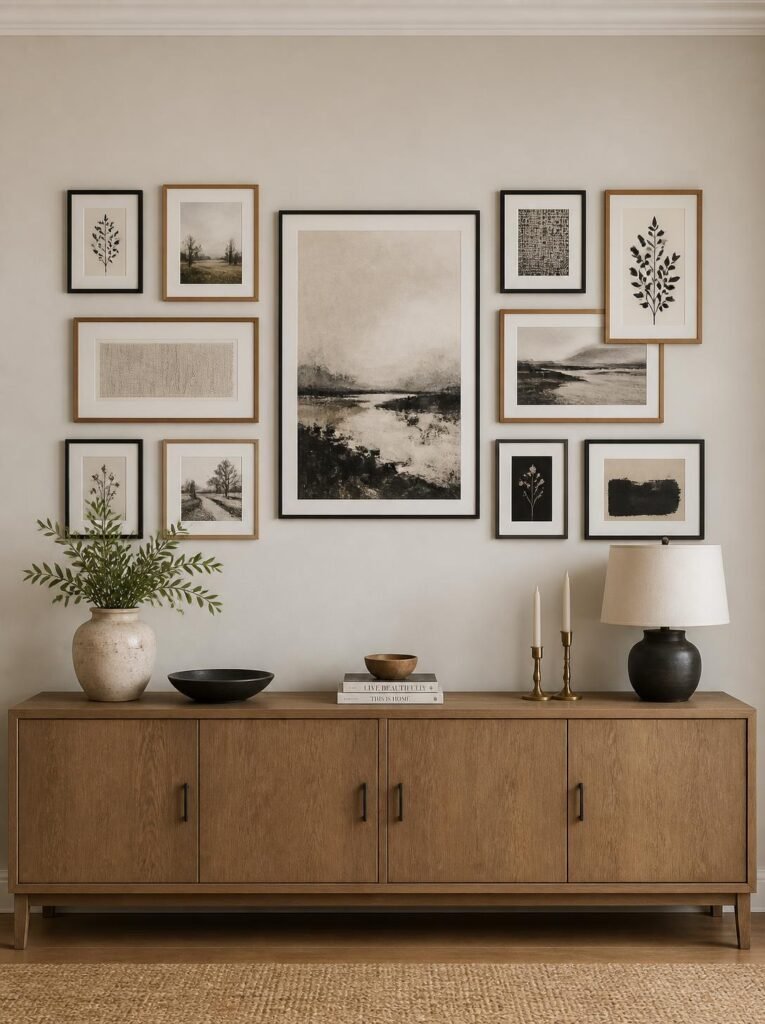
Your dining room walls need art. One large piece (36 inches or larger) works. Multiple smaller pieces in a gallery wall also works, if planned intentionally.
Stick to black, white, or natural wood frames for gallery walls. Mix sizes, some vertical, some horizontal, but keep spacing consistent (about 2 to 3 inches between frames). The overall shape should be roughly symmetrical, either rectangular or slightly organic.
Lean pieces against the wall rather than hanging them permanently if you’re renting or uncertain. The effect reads the same. Choose art that complements your table and wall color without competing for attention. Landscapes, abstracts in your color palette, and black-and-white photography all work.
7. Mirrors to Expand the Space and Reflect Light
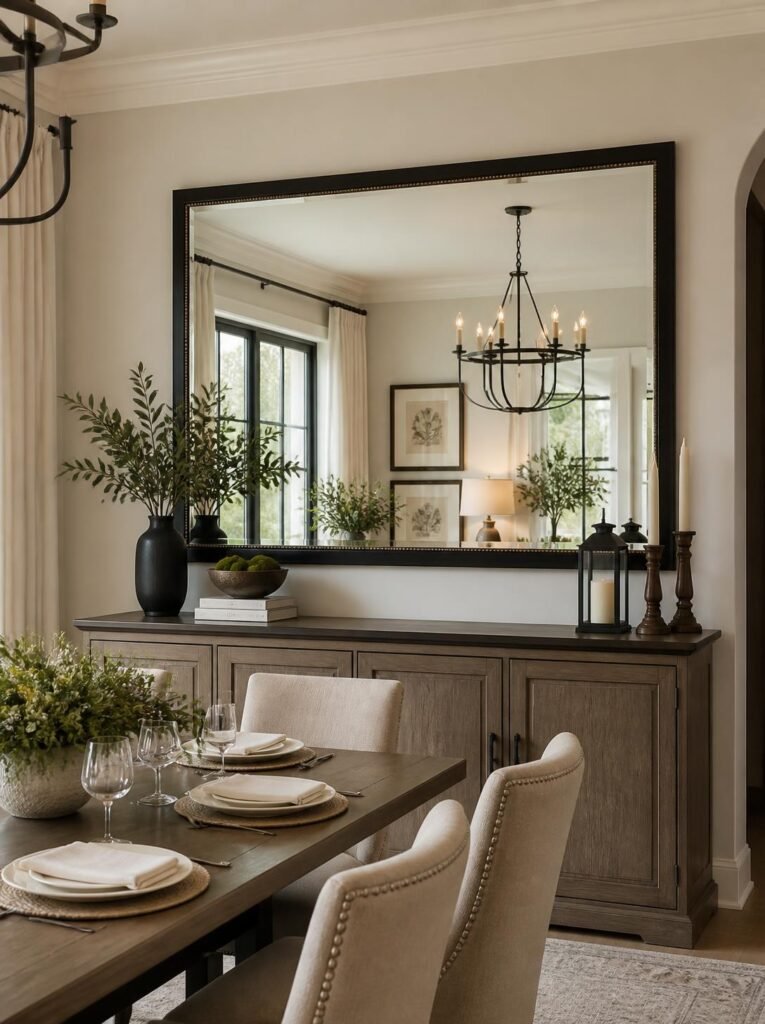
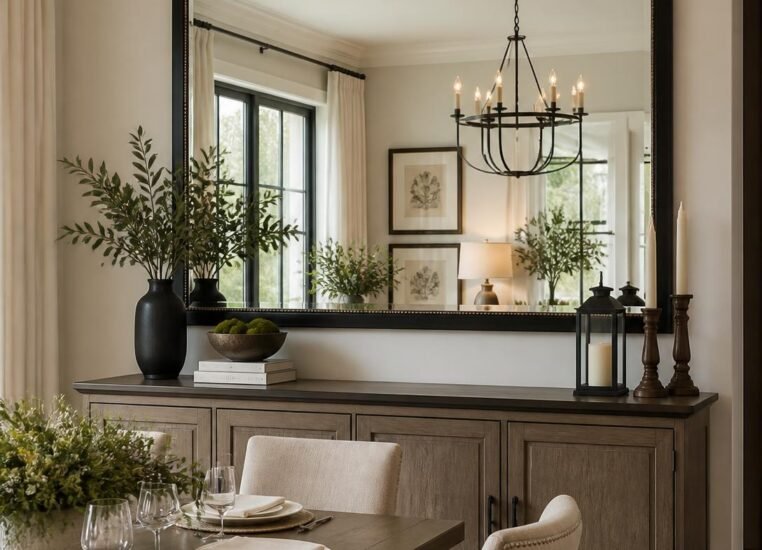
A large mirror above a buffet or console doubles the visual impact of your dining room. Mirrors reflect light, expand the sense of space, and add depth. They’re practical too, you see the table from different angles.
Ornate mirrors feel traditional. Simple black or natural wood frames feel modern. Leaning a large mirror against the wall works and gives you flexibility to move it later. Position it so it reflects something beautiful, your centerpiece, a window, or your art wall.
Mirrors in dining room decor ideas serve double duty: they’re functional and decorative. One well-placed mirror changes how a room feels.
8. Layered Lighting with Sconces and Wall Fixtures
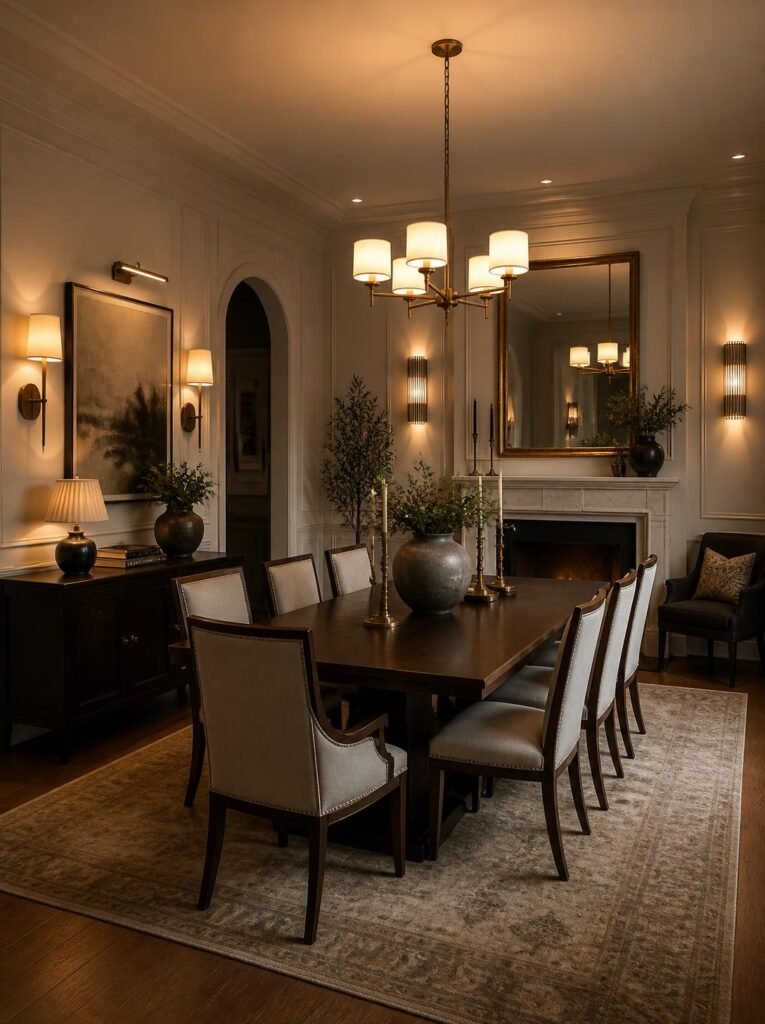
Overhead lighting alone feels flat. Add wall sconces on either side of a mirror, console, or buffet. Sconces soften the room, add warmth, and create visual balance.
Brass or gold sconces feel warm and inviting. Black or matte finishes feel contemporary. Sconces should be positioned at eye level or slightly above when you’re seated at the table. This placement keeps them from creating glare directly into your eyes.
For dining room decor ideas, think in layers: overhead light for function, sconces for ambiance, candles for intimacy. Use dimmer switches to adjust the mood depending on the time of day and who you’re entertaining.
9. A Cohesive Color Palette Across the Table
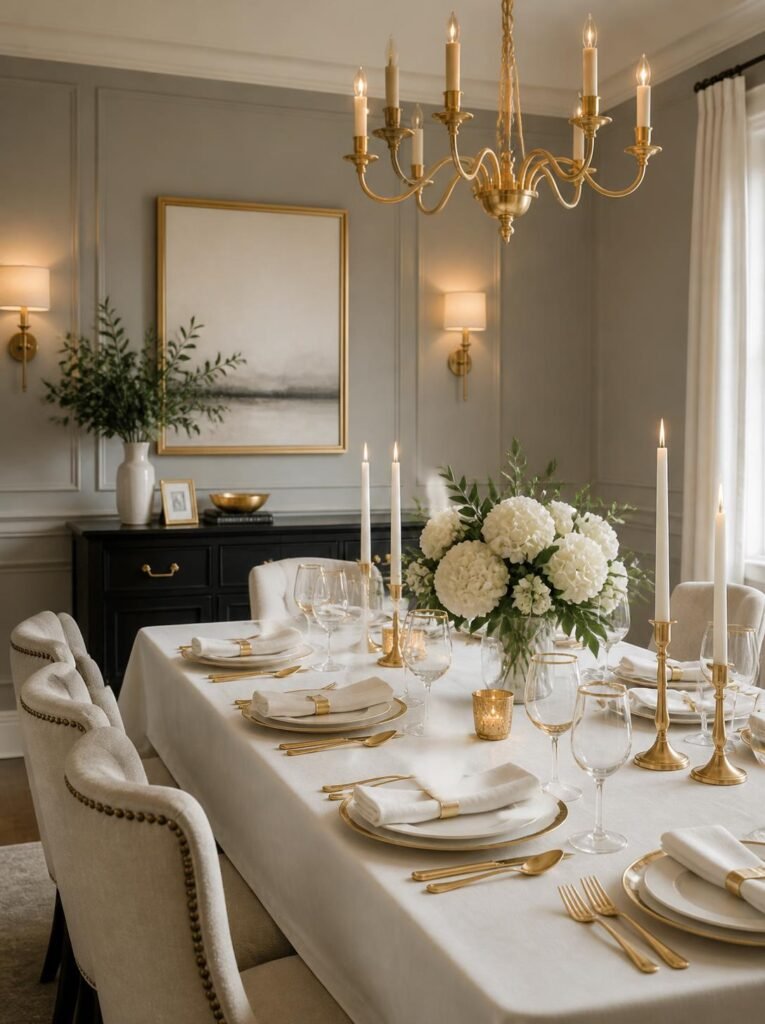
Choose a color story and commit to it. Say: soft gray walls, white linens, and brushed gold accents. Or: deep navy walls, cream dishes, and silver flatware. Every element should feel like it belongs in the same room.
Avoid mixing too many metals. Gold and brass work together. Silver and chrome work together. Mixing gold and silver throughout the room reads as indecisive. Pick one and let it repeat across your fixtures, flatware, and hardware.
Pattern works if everything else stays neutral. If your placemats have pattern, keep dishes simple. If your table runner is patterned, choose solid napkins. If your wall is wallpapered, keep the table understated. Restraint reads as elegance.
10. Tableware That Works Hard
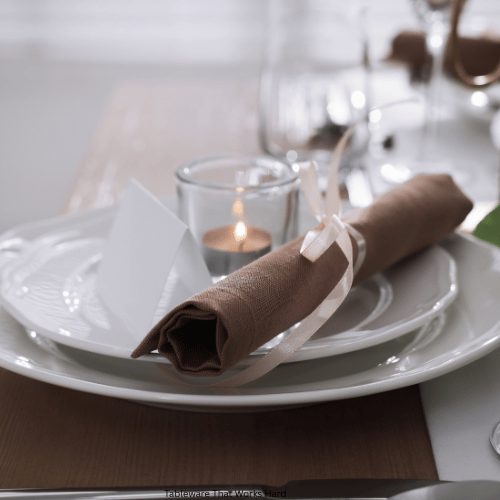
Quality dishes and glassware don’t have to be expensive. White dishes work everywhere and last forever. Cream plates feel softer than bright white. Patterned plates work if used sparingly and only on the dinner plate layer.
Glassware should be clear so it doesn’t distract. The rim of your water glass should line up with the tip of your knife, this alignment looks intentional. Use separate glasses for water and wine in formal dining room decor ideas. Casual settings can skip this.
Silverware should match or coordinate. Mixing metals is contemporary if done intentionally, but cohesive silverware sets read more polished. Avoid having too many pieces at each place setting unless you’re doing a multi-course formal dinner.
11. Window Treatments That Frame and Soften
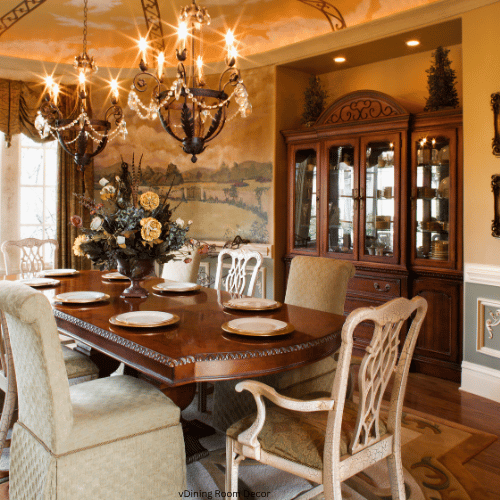
Bare windows feel unfinished. Dining room decor ideas need window treatments that complement your wall color and overall style. Linen curtains in white, cream, or your wall color soften the room. Shutters feel tailored. Roman shades feel clean.
Hang curtain rods high and wide, this makes windows appear larger than they are. Let curtains puddle slightly on the floor for a luxe look, or keep them just touching the sill for a cleaner appearance. Match your curtain color to your wall or keep them a shade lighter or darker for visual interest.
Avoid patterns in curtains if your walls are already patterned. Keep window treatments simple so they enhance rather than compete.
12. Textural Elements Through Rugs and Upholstery
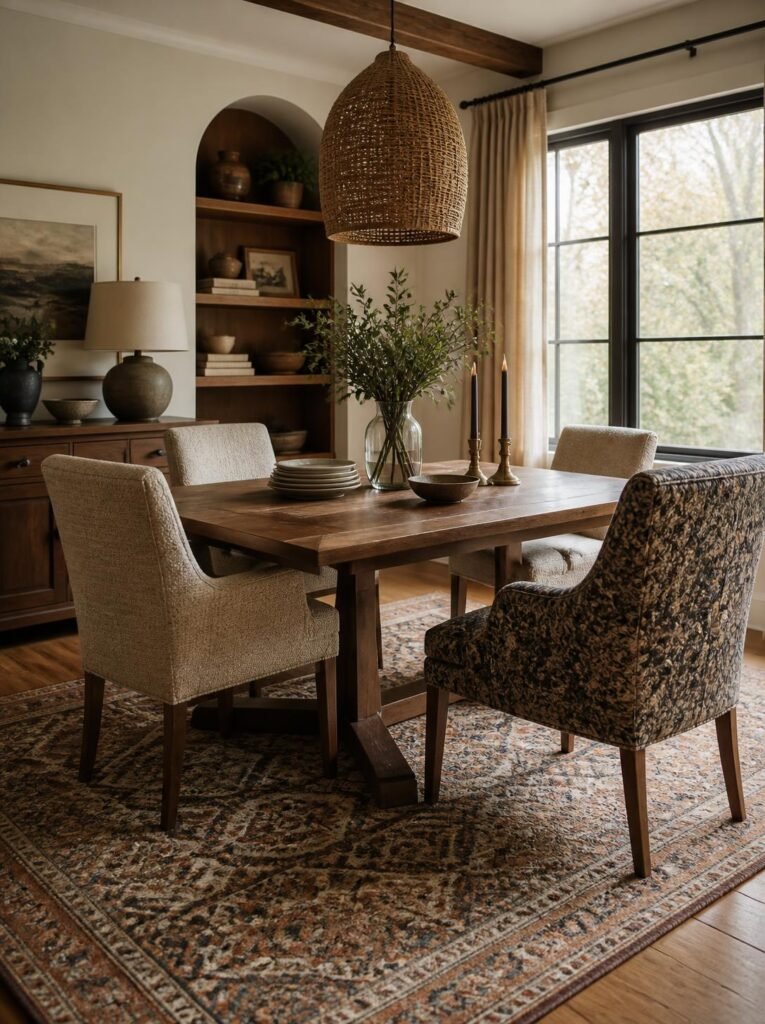
A dining room rug anchors the space and defines the eating area. Choose a rug large enough that chair legs land on it when pulled out. This makes the table feel grounded and intentional.
Natural fiber rugs (jute, sisal, wool) add warmth and texture. Patterned rugs work if subtle. Dark rugs hide spills; light rugs feel open. A rug runner down the center of the table toward a buffet or console creates flow in the room.
Upholstered dining chairs add comfort and visual softness. Linen, velvet, or leather all work depending on your style. Neutral upholstery lets your table styling shine. Patterned or bold-colored chairs work if the rest of the room stays minimal.
Putting It All Together
Dining room decor ideas work when every element connects. Your wall color should enhance your table setting. Your lighting should highlight both. Your art should feel part of the same story.
Start with the foundations: wall color, table basics, and overhead lighting. Add art and accessories. Notice what draws your eye. Build momentum from there. The best dining rooms feel like the people who live in them, not like magazine spreads you’re afraid to touch.
Implement one or two of these dining room decor ideas per month rather than overhauling everything at once. Change happens naturally when you approach it thoughtfully. Your table and walls will reflect the care you put into creating a space where people want to gather.